
Finding San Bernardino County Residents
Every San Bernardino County trail starts with a different key. The assessor begins from a situs address, a parcel number, or an owner name. The recorder works from grantor and grantee names. The Registrar of Voters lets a voter check personal registration status. Broader voter-file access depends on a permitted purpose. The court's CAP portal answers cases, not households. Older residents take a different path. The California Room and the county archives may matter more than any current database.
Keep ownership and occupancy separate. A parcel ties a person to land without proving that anyone lives there. Deed parties can be sellers, lenders, trustees, or beneficiaries. A directory entry places a household at an address without saying who holds title. Agreement is the real test. When a name, address, date, and a second record line up, the result earns confidence. The San Bernardino County resident lookup page follows that one-person verification path in more detail.
- Start with the county Public Assessor Map when an address or parcel is known. Record the APN, current owner fields, legal description, and document numbers.
- Use the Recorder index for that person's name and spelling variants. Match the document date and legal description before treating a result as relevant.
- Use California My Voter Status for your own registration status. Request the county voter file only when the proposed use fits California law.
- Search CAP, vital-record channels, business filings, or a professional-license lookup when the question concerns a court event, family event, business, or credential.
- For a past household, move to directories, newspapers, census schedules, probate, and archives. A CPRA request is a fallback for an identifiable existing county record that has no dedicated route.
Note: A residents-directory result earns real trust when two independent custodians agree on identity, place, and time instead of one lucky name match. Cross-checking is quick.
A second record can come from property rolls, the recorder, or the assessor.
San Bernardino County Resident Records Offices
One agency anchors the county's records map. San Bernardino County's Assessor-Recorder-County Clerk, shortened to ARC, runs several divisions with distinct jobs. The Assessor ties a situs to parcel history. The Recorder indexes deeds, liens, easements, releases, and maps. The County Clerk issues marriage licenses and birth and death certificates, files fictitious business names, and handles notary bonds, but it holds no court or divorce files. Two custodians sit outside ARC. The Registrar of Voters is a separate county office, while the Superior Court answers to the state judiciary.
ARC Recorder-County Clerk
222 W. Hospitality Lane, 1st Floor
San Bernardino, CA 92415-0022
909-387-8306
ARC Assessor Services
San Bernardino County, California
Public Assessor Map and govPIMS
909-387-8307
Registrar of Voters
777 E. Rialto Ave.
San Bernardino, CA 92415-0770
909-387-8300
The county's limits show up just as clearly. Ask the recorder who owns an address, and the answer stalls without a name bridge from the assessor. Ask the voter office for a household list. The answer is no. ARC's general records-request route also excludes ordinary real-estate, vital, fictitious-business-name, military-discharge, and election orders, because dedicated services control those. Court files belong at the filing district, and older government records may sit in the County Historical Archives or the library.
San Bernardino County Resident Parcel Search
Address-first lookups in a residents directory start with the San Bernardino County Public Assessor Map, known as govPIMS Parcel Access. Four modes are offered: Parcel Search, Address Search, Name Search, and Parcel Utilities. The address box asks for street number, street name, and city, and the portal works out the state and ZIP on its own. What comes back is a single parcel record. It is not a roster of everyone living at the home.
The parcel report itself is dense. It can list the APN, parcel status and type, use code, district, tax status, land type, access, size, current-owner name, relationship, interest percentage, owner type, acquisition date, document date, and document numbers. Tabs labeled Property Info, Roll Values History, Parcel History, Owner History, Supplement History, Land, SFR, and Other Chars round out the picture. Mailing fields for owners may be withheld under Government Code §§7928.200-7928.205, so a blank mailing address does not mean the search failed.
The assessor interface shown for this San Bernardino County residents directory entry uses those same controls.
| Field or control | Type | Required/default | Format or result |
|---|---|---|---|
| Parcel Number | Text | Required in parcel mode | Type parcel number, then Search |
| Address | Text/autocomplete | Required in address mode | Street number, name, and city; situs-address utility |
| First Name / Last Name | Two text fields | Required in name mode | Owner-name search |
| Active Names / Inactive Names | Checkboxes | Active checked; inactive unchecked | Current or older owner names |
| Formatted / Unformatted Name | Checkboxes | Formatted checked by default | Structured or literal matching |
| Attached Parcel Report | Utility field/button | Required for report | Generates parcel history and owner fields |
The ARC property-information hub carries the map link plus the county's roll products. Annual roll summaries run from 1978 to the present. Assessor Services takes APN questions by phone. The assessor itself cautions that assessment data is not a conclusive determination of legal title.
Treat the map carefully. Separate the situs address from the tax-mailing address and from the legal description before drawing any conclusion. A situs is the physical place. A mailing address can point somewhere else entirely. A legal description may use a tract and lot or a section-township-range survey. Those distinctions keep an address clue from masquerading as a complete resident record.
The assessor parcel search is free online. Anyone unable to use it can call Assessor Services. The county publishes no all-residents export, so the dependable street method works parcel by parcel, using GIS for geography and the recorder once a name is known. The govPIMS parcel screen makes the best visual first step when the search begins at a street address.
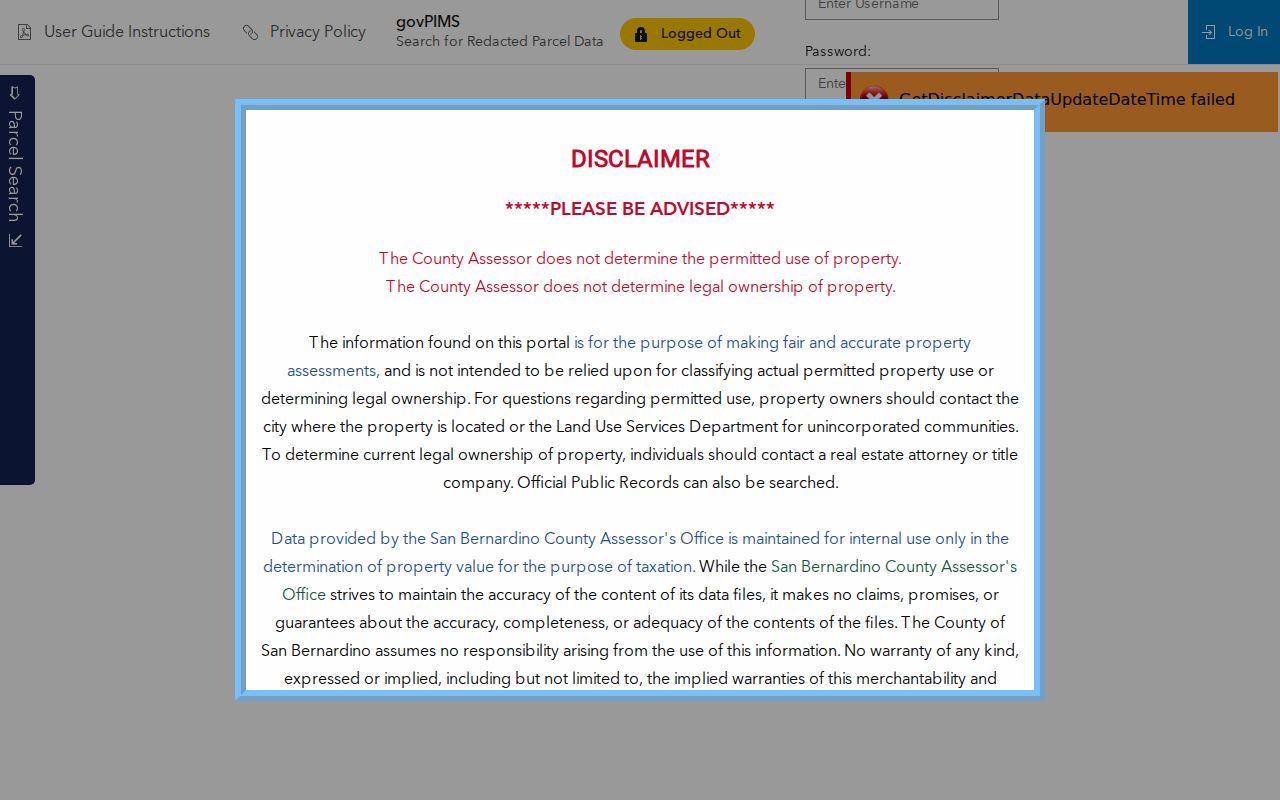
The map turns a street clue into an APN. From there, the parcel and owner views supply dates and document numbers that can be checked against other San Bernardino County records.
San Bernardino County Resident Recorder Index
The Recorder's Public Access System is a finding aid, nothing more. It points you toward a recorded instrument but never shows the document image itself. After accepting a notice, a searcher can query by document number, date, title, grantor, or grantee. The county likens its recorder index to a library card catalog. Spelling variations matter, so try more than one. Two limits stand out. The system cannot search ownership by street address, and results arrive as text only. The official-record page gives the general index a reach of 1925-present. A county property-research guide maps the practical chain-of-title workflow from 1958 forward, with pre-1958 decades preserved on microfilm at the main Recorder office. A hit in this San Bernardino County residents directory tool yields a party role, date, title, and document number, yet none of that proves current ownership, occupancy, or the legal effect of a deed.
| Visible index fields | Grantor, grantee, document number, document date, document title, and indexed party role |
|---|---|
| Image access | Office inspection at the Hall of Records or High Desert Government Center, or a paid copy order |
| Copy routes | Online noncertified orders by email, certified orders by shipment, mail request, or in-person service |
| Published charges | First page $4, later pages $1.50, seal $1.50 per page, and a 3.5% card surcharge; a July 1, 2026 mail schedule lists $3.50 standard and $29 priority |
Need a paper copy instead? Mail the Recorder at 222 W. Hospitality Lane, 1st Floor, San Bernardino, CA 92415-0022, and expect a stated one-to-two-week turnaround. Office visits work best by appointment. The county also runs a subscriber service at $125 setup plus $0.10 per image or index and title result. Batching times for that service vary. A subscription only makes sense for a recurring records need. Everyone else should stick with the ordinary public route.
Think of each index entry as a bridge to the next step. Pull the current parcel owner from govPIMS and run that name as a grantee. The matching deed names a grantor. Search that grantor as the next grantee, and repeat. Anchor every hop to the legal description. A street label alone can drift onto the wrong land. The Recorder Public Access System entry screen shows why document metadata and careful spelling carry so much weight in a San Bernardino County residents directory.
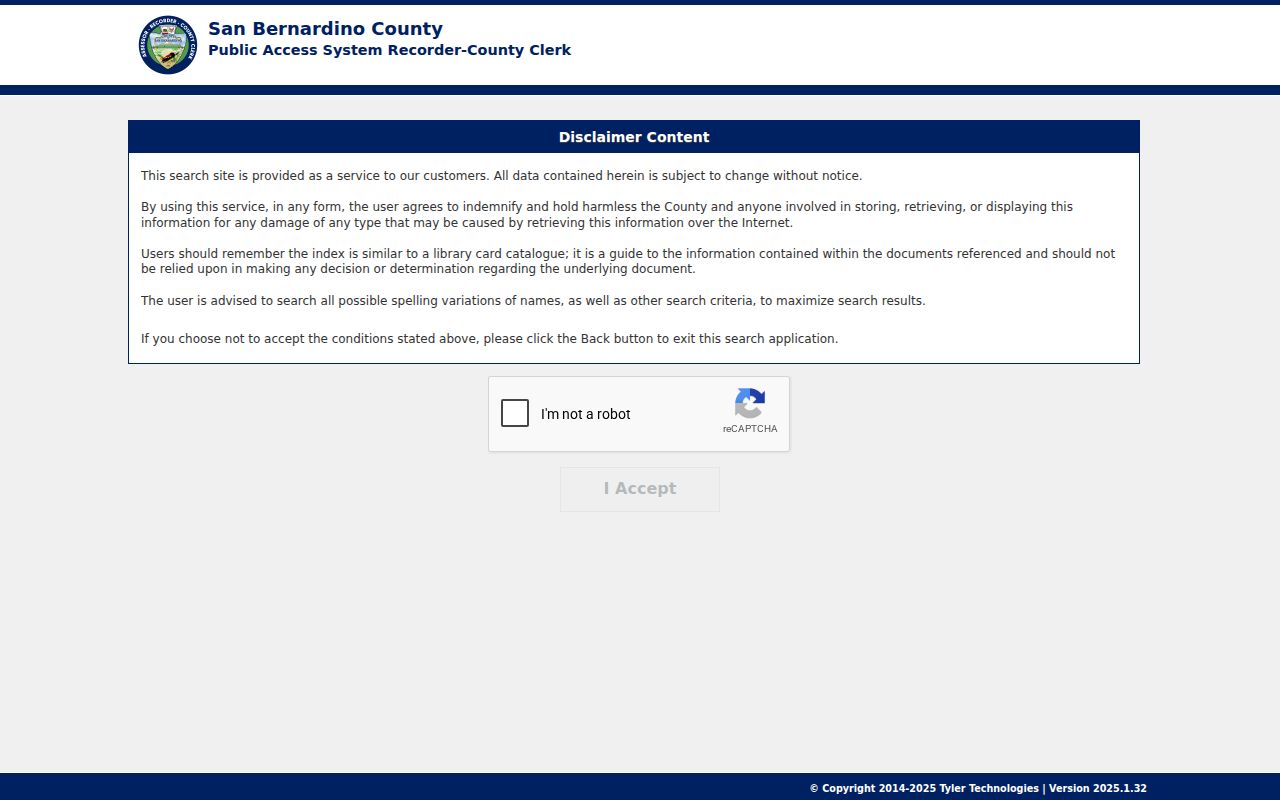
That disclaimer screen carries its own lesson. An index result is a lead to inspect, never a substitute for the recorded instrument itself.
Current San Bernardino County Resident Sources
Current resident-directory work in San Bernardino County is really a routing problem. One source answers ownership but says nothing about occupancy. Another carries a name yet hides the current address. Keeping every record set in its proper lane is the whole game for a resident lookup.
| Record source | Useful clue | Keeper | Access boundary |
|---|---|---|---|
| Assessor parcel record | Situs, APN, owner fields, owner history, values, characteristics | ARC Assessor | Free map; some names and mailing fields may be protected |
| Recorder index | Grantor or grantee role, title, date, document number | ARC Recorder | Free metadata; images at office or by copy order |
| Voter status | One voter's registration status and election details | California SOS / county ROV | Self-lookup; full file requires a statutory purpose |
| Court case information | Party, case type, register events, hearings, disposition | San Bernardino Superior Court | CAP is limited; sealed and older/off-site files need another route |
| Business or license record | Declared business connection, license status, agent or manager | California SOS / DCA | Business address is not automatically a home address |
| Inmate or offender registry | Booking or registry information in a defined public system | Sheriff / California DOJ | Fields and statutory exemptions vary |
A one-name question gets stronger with a match. The same middle name, APN, case number, license number, or date may turn up in a second record. For a street question, stay at parcel level first. Then shift to a street-by-street address workflow. No current source deserves the label of a complete residents directory. Nobody has a list of every person living in San Bernardino County.
San Bernardino County Resident Voter Rules
Voter rolls anchor many lookups in the San Bernardino County residents directory, because they tie a name to a place at a point in time. The state offers California My Voter Status as a self-service check. You prove identity with your first and last name, date of birth, and either driver-license or state-ID details or the last four digits of a Social Security number. The county's own tool, My Elections Gateway, goes further for San Bernardino County voters. It can show registration status, the registration address, districts, a sample ballot, vote-by-mail status, and participation history. Ballot choices stay private.
The state voter-status form is the right visual reference for a personal status check in the San Bernardino County residents directory workflow.
The county file itself is rich. Each record carries name, residential address, mailing address, party preference, registration date, precinct and district codes, language, vote-by-mail flags, and election participation. Status runs from Active to Inactive, Canceled, or Pending. Getting someone else's data is another matter. It takes a voter-file application, a wet signature, a stated permitted purpose, a use agreement, and an agency decision. Elections Code §2194 restricts use to election, scholarly, journalistic, political, or governmental purposes, while Government Code §7924.000 limits ordinary inspection. Driver-license details, Social Security numbers, and signatures remain confidential.
For the county application, turn to the Registrar of Voters records page. It lists the office at 777 E. Rialto Ave., San Bernardino, CA 92415-0770, phone 909-387-8300, plus the application path. A voter wanting personal proof can buy a certified registration letter in person for $1.50 with government photo ID. Weekly reports exist too. They give aggregate counts, not an open household directory.
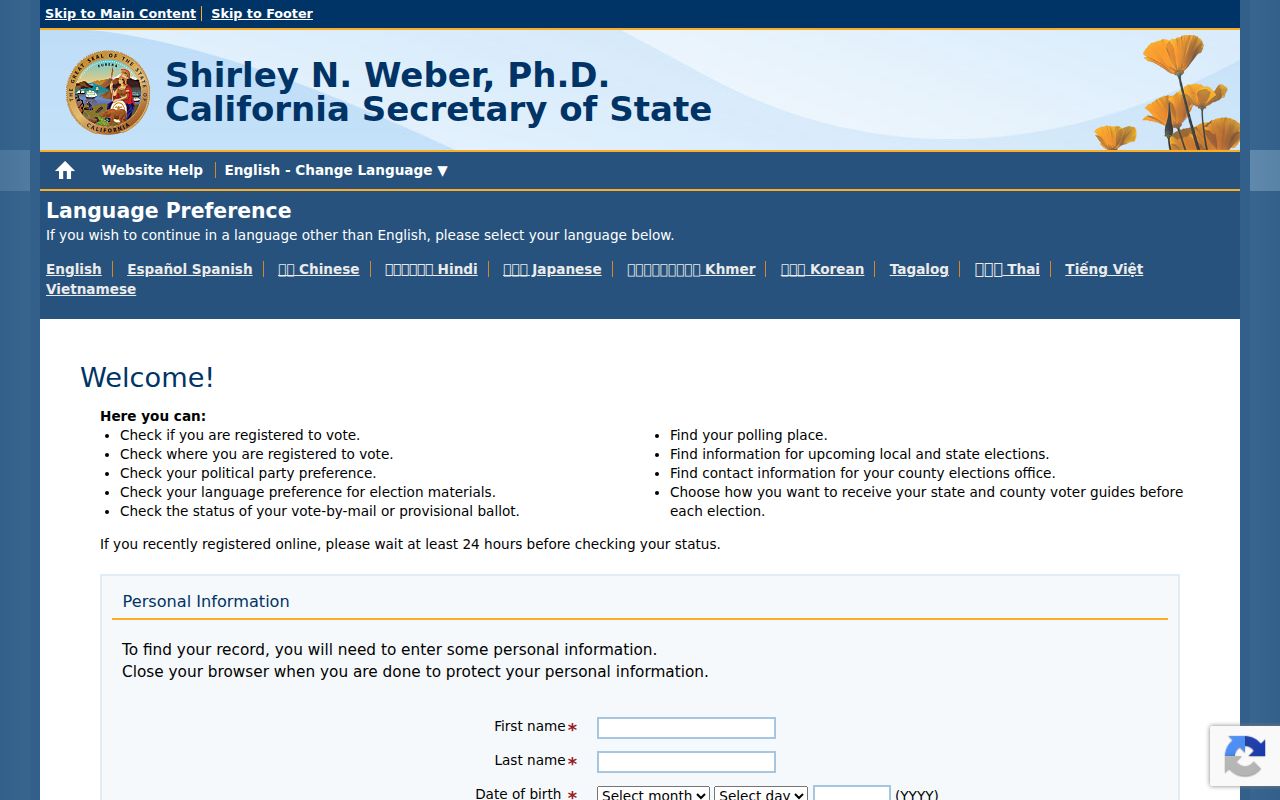
The form's matching fields tell the story. A voter lookup verifies one person's status rather than producing a casual street list.
San Bernardino County Resident Vital Records
Birth, death, and marriage questions follow a different path than a parcel or deed. San Bernardino County ARC issues certificates for county events. It also handles marriage licenses bought in the county. The California Department of Public Health serves as statewide custodian and supplies the state forms. Anyone may obtain a public informational copy. An authorized certified copy is different. It demands the relationship and sworn-statement rules of Health and Safety Code §103526. Confidential marriage copies go only to a party or a court-order recipient. That rule sits under Family Code §509.
| Record | Finding or copy route | Access detail | County fee listed for July 1, 2026 |
|---|---|---|---|
| Birth | ARC or CDPH form | Informational copy generally public; authorized certified copy needs qualifying relationship and sworn statement | $34 |
| Death | ARC or CDPH form | Informational and authorized categories differ; funeral and legal categories have specific rules | $26 |
| Public marriage | ARC for county-issued license or CDPH | Informational copy generally public; certified copy follows §103526 | $19 |
| Confidential marriage | County clerk where issued | Party access or court order under Family Code §509 | $19 |
Ordering a certificate from San Bernardino County starts with the application. It asks for the applicant's name, address, and contact details. It also needs the event date and place, the name on the certificate, your relationship or purpose, an eligibility category, a signature, and the date. Mail an authorized copy, and a notarized sworn statement must ride along. Requests go through online, mail, or in-person channels. Vendors may tack on service or shipping charges. Sometimes the county was not the issuing custodian. Then the statewide vital-record page is the better stop.
Access rules vary by record type. California sets no single age at which every birth record opens. Adoption records stay sealed under Family Code §9200 et seq. A vital index or informational certificate can supply an event clue for a residents directory search. That clue can grow into family history. Treat it as a lead, not proof of where a living person lives now. ARC's vital-records page lays out the county choices and the copy distinctions. They matter before any San Bernardino County order goes out.
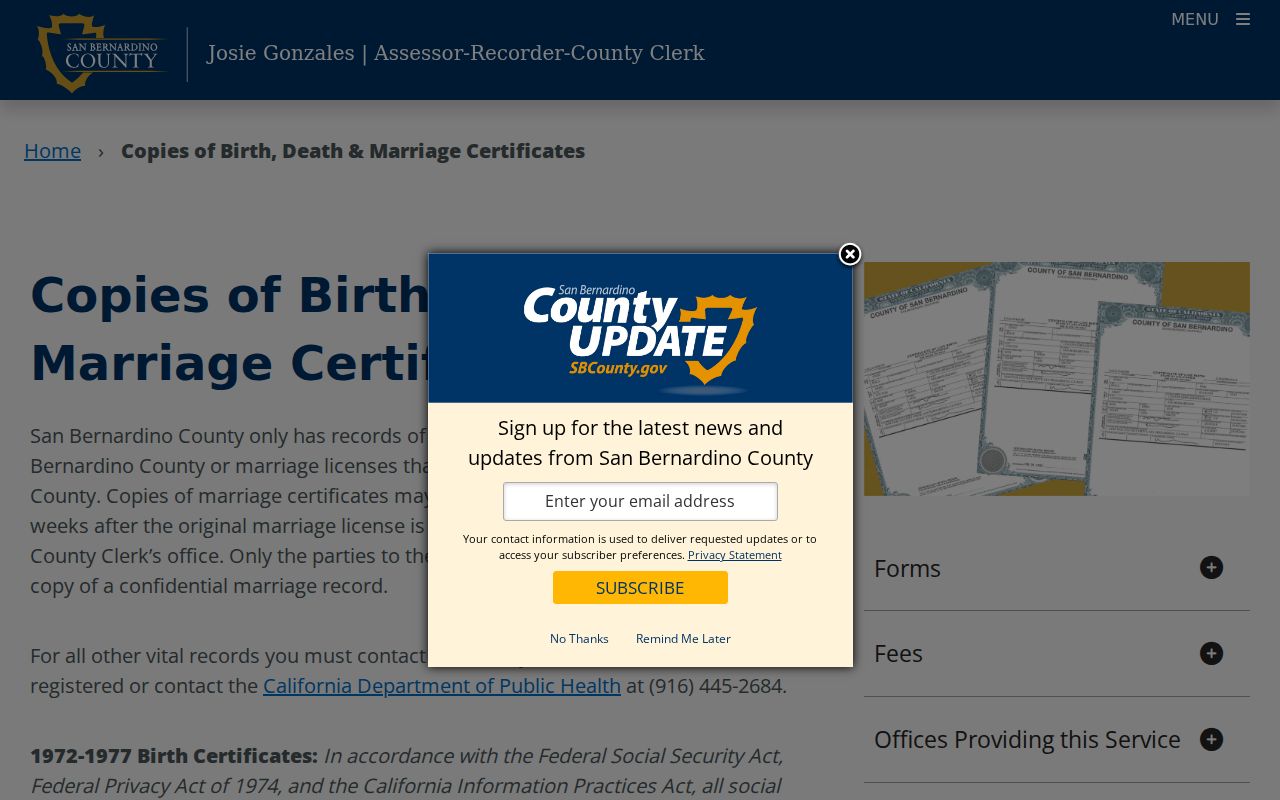
The page makes the copy types plain at a glance. A public informational copy and a restricted certified copy sit side by side before an order is ever sent.
Business and License Trails in San Bernardino County
A resident can stay traceable through commerce long after the property trail goes cold. Business filings and licenses create their own public connections. California Secretary of State bizfile Online searches by entity name or number. Results can carry legal name, status, formation date, principal or mailing address, agent, officers or managers, and filing images. The county's fictitious business name service ties a trade name to its registrants. Neither filing proves a declared business address doubles as a home address.
Professional credentials open a second trail. California Department of Consumer Affairs license search handles person, business, license, or board queries. Results may show license type, number, status, dates, public address, and discipline links. Custody of a license record depends on the field. The Contractors State License Board, Department of Real Estate, State Bar, or Alcoholic Beverage Control may hold it instead. The Environmental Health portal may hold it as well. Work from the latest filing. Keep agent, attorney, virtual-office, business, mailing, and practice addresses separate. The California business search interface is one of the current-record tools. It is assigned to the San Bernardino County residents directory.
A business filing hands you a name, a declared address, and a date to weigh against another official record. Its commercial purpose keeps it from passing as a household roll. The state professional-license search offers a second kind of declared connection for the same comparison.
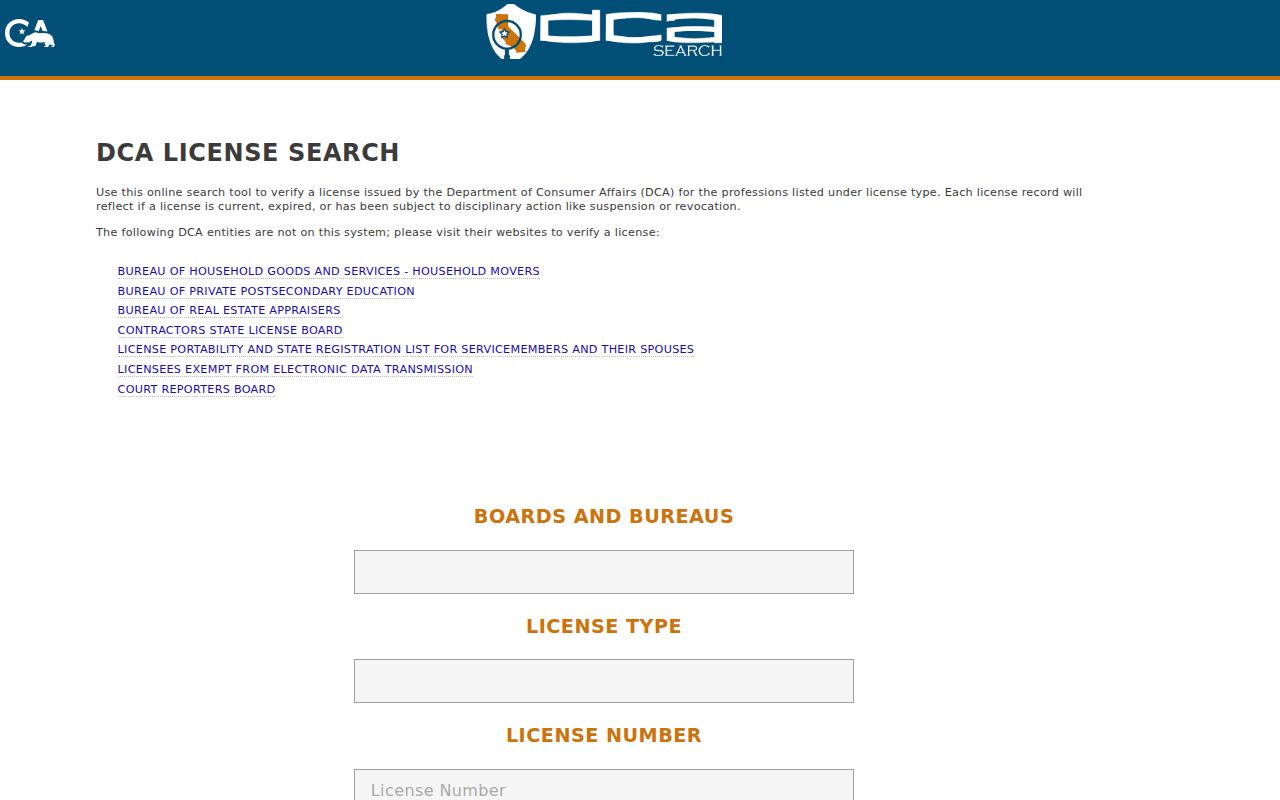
License status and discipline fields can separate two people who share a name. A practice address still needs careful reading, though.
Specialized San Bernardino County Person Records
Not every official search reaches a broad residents directory. Some pull one narrow record set. The San Bernardino County Sheriff Inmate Locator takes a booking number or name. It also accepts birth date, age, and gender. The California Department of Corrections and Rehabilitation runs a separate incarcerated-person locator. California's Megan's Law site offers name and map, address, city, ZIP, and county modes. Penal Code §290.46 governs its information. It is not a complete criminal-history database.
Each system carries its own fields and rules. A Sheriff result template can show booking number, name and alias, birth date, physical descriptors, and arrest date and agency. It may also list bail, custody location, projected release, release information, and mailing or visiting instructions. Booking photos are generally not released by the Sheriff. An empty result may point to a statutory exemption. It could also mean a different custodian, or simply a stale search term.
The California registry search is a specialized public-record route. It is not a stand-in for the fuller San Bernardino County residents directory.
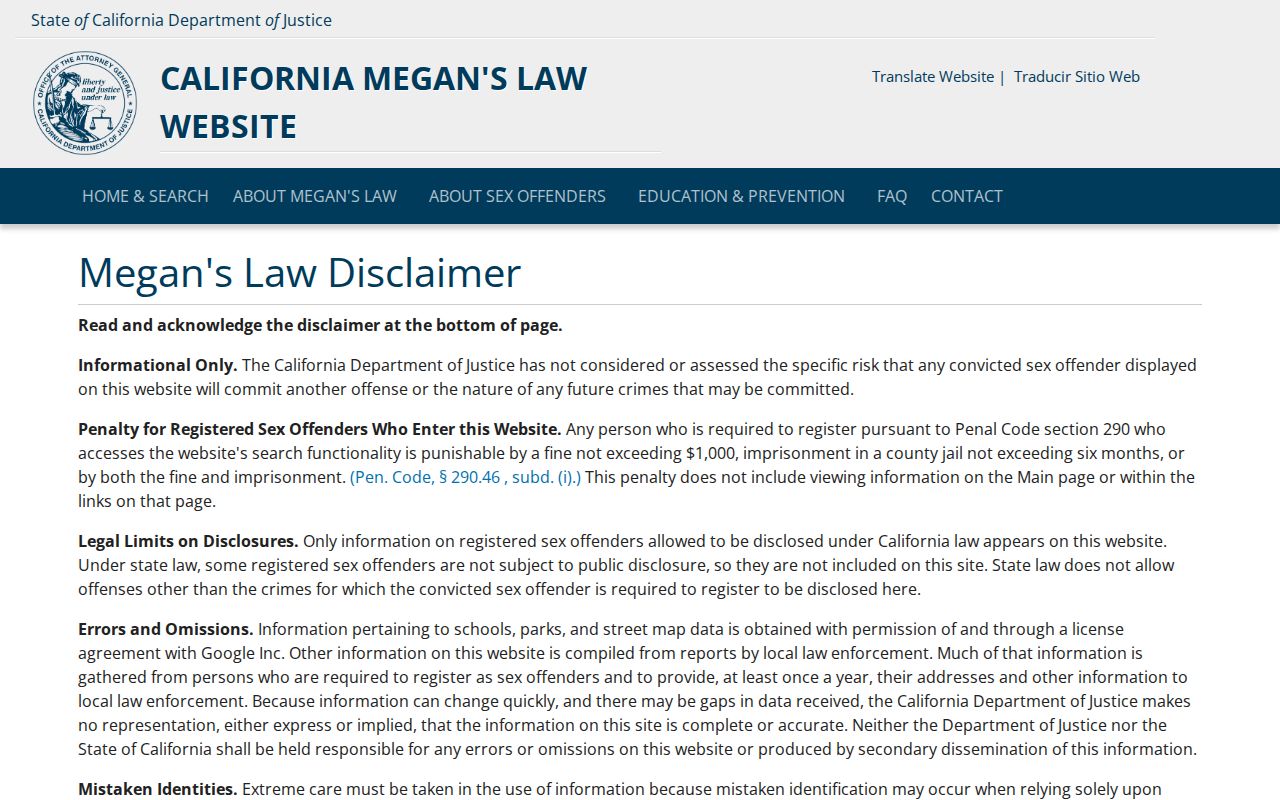
The registry interface shows why coverage matters. Any search result must be read against its statutory purpose, not stretched beyond it.
When San Bernardino County Records Need a Request
The California Public Records Act, Government Code §§7920.000-7931.000, serves as a fallback for a reasonably described existing county record that no dedicated service already supplies. San Bernardino County guidance gives agencies 10 calendar days for a determination, extendable by up to 14 days in specified unusual circumstances. Inspection is generally free; duplication may be charged at direct cost. An agency can help narrow a request under Government Code §7922.600, yet it need not create a new resident report or release exempt personal data.
File an online CPRA submission through the county NextRequest portal, or follow the ARC public-records instructions. Vital, real-estate, FBN, and election products each have their own dedicated ARC channels. Court files belong to the filing district, or go through CAP. Older case files may sit off-site, and the court warns retrieval can take up to a week. For archived county records, contact the Historical Archives before trusting a closed-building notice.
The county public-records request portal is the fallback when an ordinary San Bernardino County residents directory route ends without an answer.
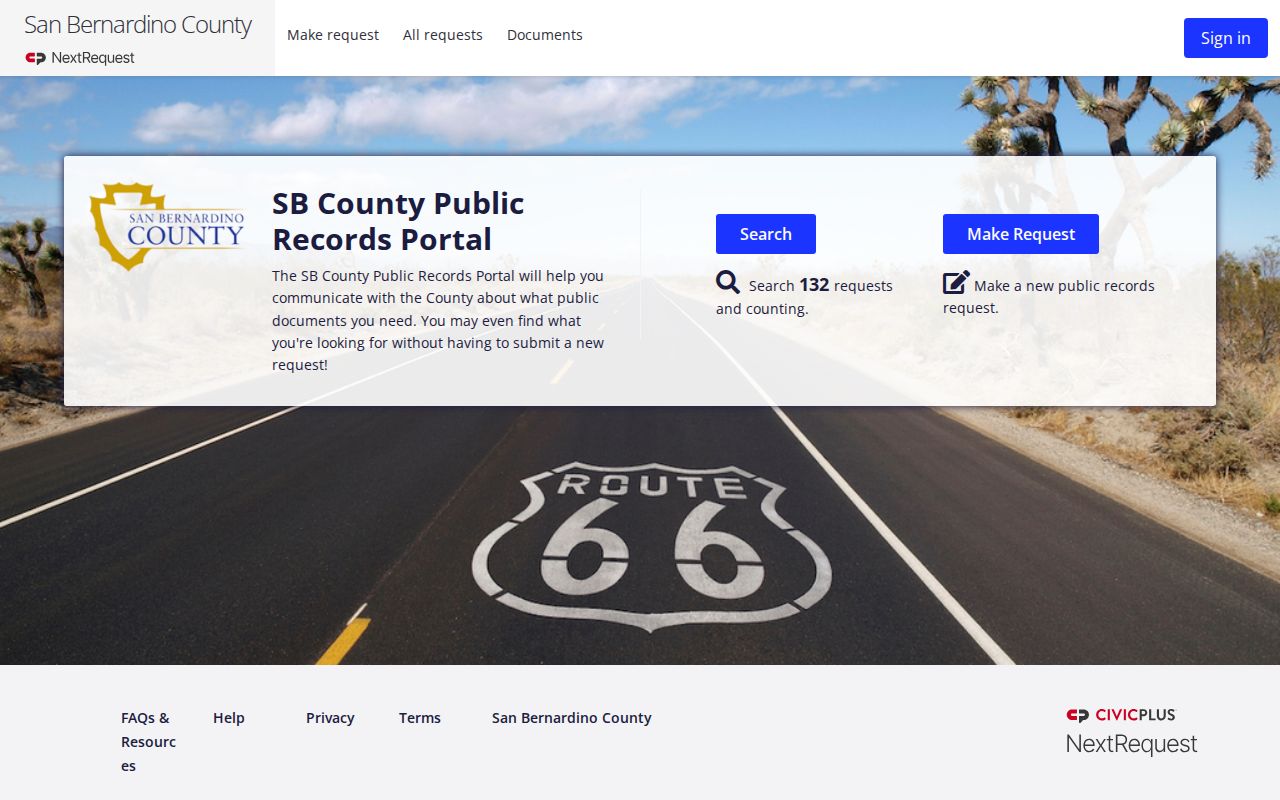
A focused request names the custodian, record type, date range, and useful identifiers. That gives staff a workable search without asking them to build a new directory.
Historical San Bernardino County Resident Sources
Old San Bernardino County directories live in one special room. The Arda Haenszel California Room sits inside Norman F. Feldheym Central Library. Its shelves hold San Bernardino city directories from 1887-1968, criss-cross directories from 1976 to the present, and telephone books reaching back to 1918. Gaps exist. The posted range does not promise that every yearly volume survived. Call 909-998-4251 before you go, and ask whether the volume you need is on the shelf. The room keeps shorter hours than the main library. Hours run Monday and Tuesday 2-4 p.m., Wednesday 10 a.m.-3 p.m., Thursday 2-4 p.m., Saturday 2-4 p.m., closed Friday and Sunday.
The California Room reaches far beyond directories. Newspapers, printed and microfilmed obituaries, Great Registers, census material, cemetery records, school annuals, family histories, maps, diaries, and the Mary Lewis early-settler collection all sit nearby. Mail research costs $20 per hour or any part of an hour plus $0.25 per copied page. A useful question names a specific date and any other helpful facts. Two neighbors widen the net. County Historical Archives add lot books, probate, and more Great Registers. CSUSB contributes oral history, photographs, maps, and manuscripts.
Sample entries, collection detail, and a household-tracing method fill the San Bernardino County directory book page. One lesson matters most for a current search. An old address may need a library shelf, a newspaper, or a census pairing rather than a modern portal. Route the hunt by decade, not by database alone.
Newspapers, Census, and Probate Trails
Printed directories and local news overlap in San Bernardino County. The California Digital Newspaper Collection carries the San Bernardino Sun from 1894-1998, the Weekly Courier from 1891-1894, the Weekly Sun from 1895-1905, the Evening Transcript from 1898-1902, and the Evening Index and San Bernardino News from 1912-1918. Later papers open through NewsBank with library credentials. A name alone misleads. Pair it with an address, spouse, business, club, school, or cemetery term instead.
Census access runs on a clock. The 72-year rule keeps schedules private, so the public line runs through 1950 and reaches 1960 in 2026. Bridge missing directory years by pairing a 1940 census with a 1942 directory, or a 1918 telephone book with the 1920 census. Probate files at the County Historical Archives span 1853-1926 and may name a decedent, petitioner, executor, heirs, property, and notices. Heirs show up there. Great Registers from 1866-1908 add occupation, age, height, physical description, and naturalization status.
Note: A newspaper, census, directory, or probate entry places a person in a time and context; it is not proof of where someone lives today.
Protected San Bernardino County Addresses
A blank address in a San Bernardino County residents directory can mark a lawful boundary rather than a missing record. California's Safe at Home program offers substitute addresses and mail forwarding for qualifying survivors and certain public-facing workers. Voter records carry purpose limits under Elections Code §2194 and Government Code §7924.000. Assessor owner and mailing fields may be suppressed under Government Code §7928.200-7928.205, while court, adoption, juvenile, sealed, and confidential records can remain outside remote lookup results.
State privacy law adds another layer. The CCPA and CPRA, in Civil Code §§1798.100-1798.199.100, give consumers rights to know, delete, correct, limit use of sensitive information, and opt out of sale or sharing. The DROP program phases in a single request to registered data brokers during 2026. Those rights shape commercial republication of resident data. They do not rewrite the access rules of an official court, recorder, assessor, or archive holding county records.
Lawful personal use. Use San Bernardino County public records for family history, reconnection, civic research, and personal safety awareness. Do not use a name or address trail to stalk, harass, intimidate, or harm anyone.
San Bernardino County Resident Geography and Address Changes
County planners split San Bernardino County into Valley, Mountain, North Desert, and East Desert regions. Only about 4% of county land is incorporated. Some nominally unincorporated land sits under federal, state, or tribal jurisdiction. Permits follow the boundary. A city permit trail belongs in a municipal office. An unincorporated one goes to Land Use Services. A postal city can point one way. A municipal boundary, county line, or legal description can each point to a different search route.
That geography gives the county's residents directory several local vocabularies. Route 66 hides under many names. It appears as Fifth Street in San Bernardino and Main Street in Barstow. It runs as 7th Street in Victorville and Foothill Boulevard through Upland, Rancho Cucamonga, Fontana, and Rialto. Other stretches carry the name National Trails Highway. Helendale and Silver Lakes split between USPS and Census naming too. Test before quitting. Try the older street name. Try the directional prefix and the community name before deciding an address or resident is absent.
History layered the trails. Mormon settlement, railroads, citrus, Route 66, military development, and Black Inland Empire communities each left records. Search locally twice. Stay local to the record keeper. Stay local to the era and geography where a person appears.
Recent San Bernardino County Records Warnings
Scam warnings from San Bernardino County officials carry a lesson. Anyone using a records office should heed it. Deceptive letters have cited real recorded liens yet steered payments to third parties. Other alerts flagged fake property-tax bills, stolen checks, and a website posing as ARC. Before paying anything, confirm the domain against the official ARC address. Check the lien in the recorder index. Then deal only with the county or state office named in the record. Do not use a phone number printed on an urgent letter.
That caution matters inside a residents directory. A real name, an official seal, or a genuine document number can look convincing. Any of them can still anchor a false demand. A lookup should end at the custodian's portal, office, or published phone. It should never push a reader to share financial details. Nor should it demand payment for a guaranteed correction.
Note: A genuine county record and a genuine-looking solicitation are different things. Verify both the record and the contact channel.